
The Rituals of Relaxation
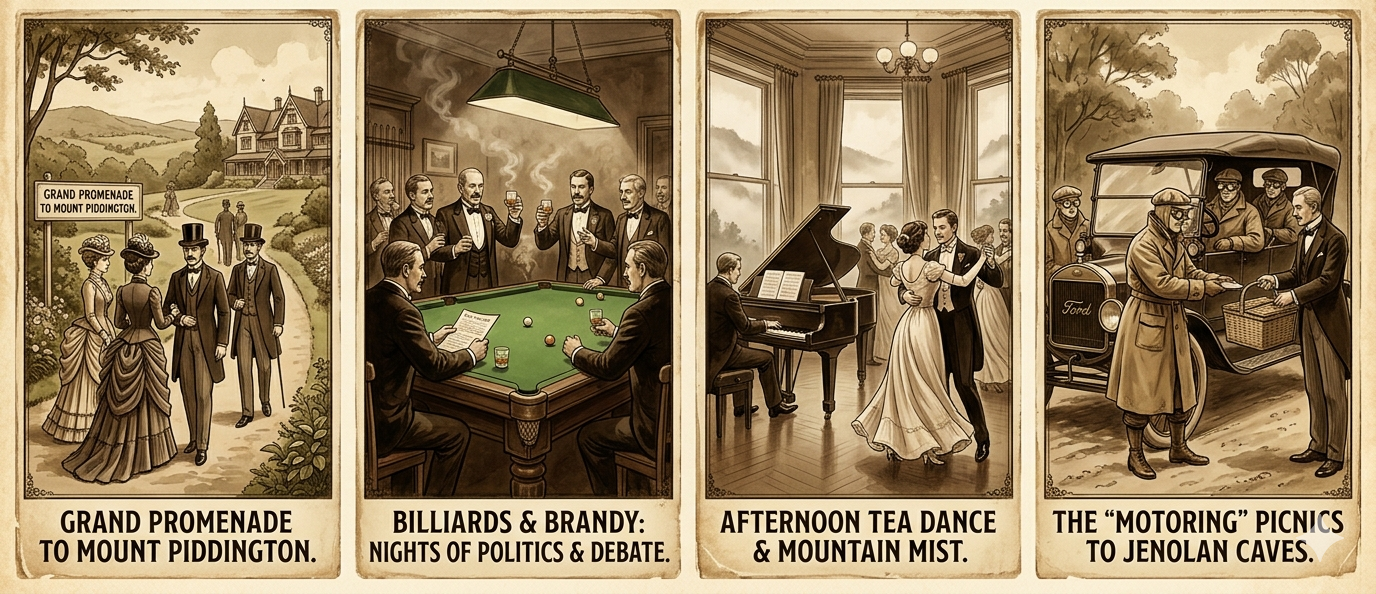
During this period, "relaxing" was an active pursuit. Guests didn't just sit; they engaged with the landscape and each other through curated social rituals.
- The "Grand Promenade": Donning full Victorian attire—corsets and top hats included—to walk the manicured paths toward Bushrangers Cave or Mount Piddington.
- Billiards & Brandy: The billiards room was the engine room of late-night politics. Many a policy was debated over the green baize.
- The Afternoon Tea Dance: As the mist rolled in, the piano in the parlor became the heartbeat of the house. It was the primary time for matchmaking among the "squattocracy" (wealthy landowners).
- Reading Parties: Guests would often gather in the library to read the latest dispatches from London, discussing them as if they were local news.
The Transition to the "V&A"
As we approached the 1920s, the atmosphere shifted from the rigid Victorian "Hotel Mount Victoria" style to the slightly more eclectic and adventurous Victoria & Albert era. The arrival of the motorcar meant people stayed for shorter bursts, but the parties became louder, fueled by the burgeoning Jazz Age and a desire to forget the shadows of the Great War.
One of the most whispered-about chapters in the hotel's history involves the "Great Federation Banquet." As the colonies moved toward becoming a single nation, the Hotel Mount Victoria became a pressure cooker of political maneuvering, high-society drama, and a few moments that nearly derailed the diplomatic process.
The Scandal of the "Leaked" Ledger (1899)
During a high-stakes weekend where Sir Henry Parkes and his contemporaries were debating the nuances of the Constitution, a minor scandal broke out that set the dining room abuzz.
A young journalist from a Sydney rag reportedly bribed a scullery maid to gain access to the private parlor. He didn't find state secrets; instead, he found a ledger where several prominent politicians had been keeping a "tally" of who could consume the most local cider without losing their dignity. When the "Cider Stakes" were published, it caused a brief moral panic in the city—but in the mountains, it only solidified the hotel’s reputation as the place where the powerful went to let their hair down.
The "Ghost" in the Silk Dress
Throughout the 1880s and 90s, guests frequently reported a "Woman in Lavender" who would appear on the grand staircase during the most crowded parties.
- The Sightings: She was often seen just as the orchestra began the final waltz of the night.
- The Reality: It turned out to be a local socialite who had a penchant for "crashing" the hotel's exclusive galas by sneaking through the servant's entrance. She was eventually caught by a night porter while trying to steal a plate of oysters. Instead of being arrested, the guests were so amused by her daring that she was invited to stay for breakfast.
The 1901 "Federation Gala" Blowout
| The Event | The Incident |
|---|---|
| The Fireworks | A display at Mount Piddington accidentally set fire to a nearby haystack, leading to the sight of several knights of the realm in tuxedos forming a bucket brigade. |
| The Toast | A toast to the new Commonwealth lasted so long (allegedly 45 minutes of naming every town in NSW) that the kitchen’s signature soufflés collapsed simultaneously. |
| The "Duel" | Two young artists nearly came to blows over whether the hotel’s architecture was "sufficiently Australian" or "too British," only to be reconciled by a shared bottle of port at 3:00 AM. |
The Relaxation of the "Roaring" Transition
By the time 1920 approached, the "relaxation" was no longer just about quiet reading. The hotel saw the introduction of:
- The Jazz Parlor: Moving away from classical piano to the "scandalous" syncopated rhythms of the new era.
- The "Motoring" Picnics: Famous identities would arrive in their new T-Model Fords, draped in dust coats and goggles, demanding hampers for trips to Jenolan Caves.